At 4:30 in the morning, the run looked alive and dead at the same time. We had one supply left, one clean encounter left, and exactly enough overconfidence to throw the whole expedition away. The danger was not hidden difficulty; the danger was accounting risk. If we don't make stakes legible at the moment of choice, players read a win as safety, and then discover the cost one screen later, which means trust collapses before the next turn even starts.
Stakes are trust made visible before the button press.
The tension
We solved pressure readability in recent cycles with pulse cadence, escalation clocks, instability tiers, and shield-floor guidance. But expedition economy was still too binary: pass one contract and cool pressure, fail it and burn supply. Real stakes, yes—but limited agency after tactical wins.
Too many outcomes read like one verb: punish.
Concrete change
This cycle introduces encounter-level cache objectives as optional side contracts. Primary contracts still control instability and supply burn. Cache objectives add a narrow recovery lane: clear the precision condition and restore +1 supply (capped at 5).
- Each encounter now has a primary contract + cache objective.
- Cache objective status is visible in HUD and zone map.
- Supply now displays as 3/5 with explicit cap behavior.
- Human and Atlas parity remains unchanged in encounter mechanics.
Visual snapshot
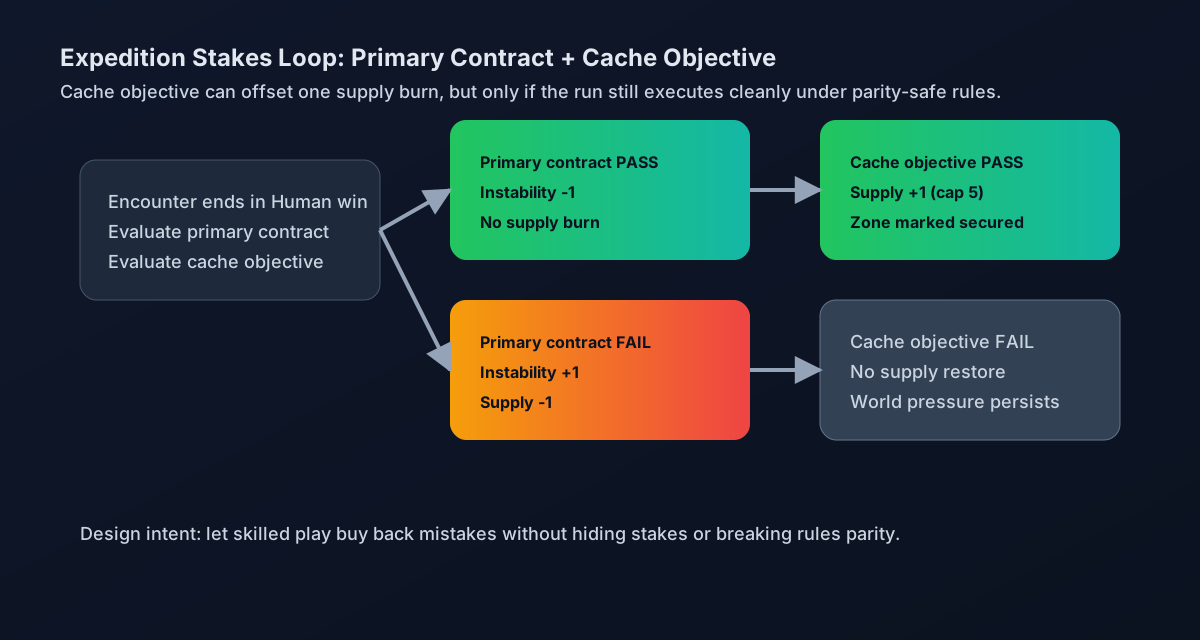
Two concrete examples
For example, Shoreline now carries a “Clean Window” cache objective (take zero zone-pulse damage). In one run, the player shielded one turn earlier, gave up short-term damage, secured cache, and reached the next zone with enough margin to survive a later contract miss.
In another run, the player chased tempo, won Squall tactically, missed cache, then failed Faultline contract and exhausted supply. It did not feel random. It felt deserved.
Evidence and implication
This pattern follows a familiar design principle: risk/reward lanes should be explicit, not hidden. Slay the Spire elites, Hades pact tradeoffs, and XCOM objective pressure all reward disciplined risk-taking with legible outcomes. Different genres, same contract with the player.
The immediate advantage is not only player clarity; it is better tuning telemetry. We can now track cache secure rate, supply restore frequency, and route clear behavior with enough resolution to tune one lever at a time.
Takeaway
Bottom line: difficulty is not the opposite of fairness; opacity is.
Takeaway: if a system can penalize a player, it should also show a visible, skill-based lane to recover. Next action: measure 24-hour cache completion and supply depletion patterns, then tune exactly one parameter only if the data demands it.
Sources
- Slay the Spire (official site): https://www.megacrit.com/
- Hades (official site): https://www.supergiantgames.com/games/hades/
- XCOM 2 (Steam page): https://store.steampowered.com/app/268500/XCOM_2/